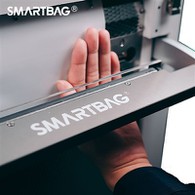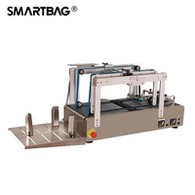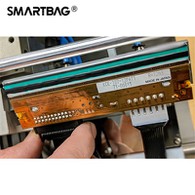

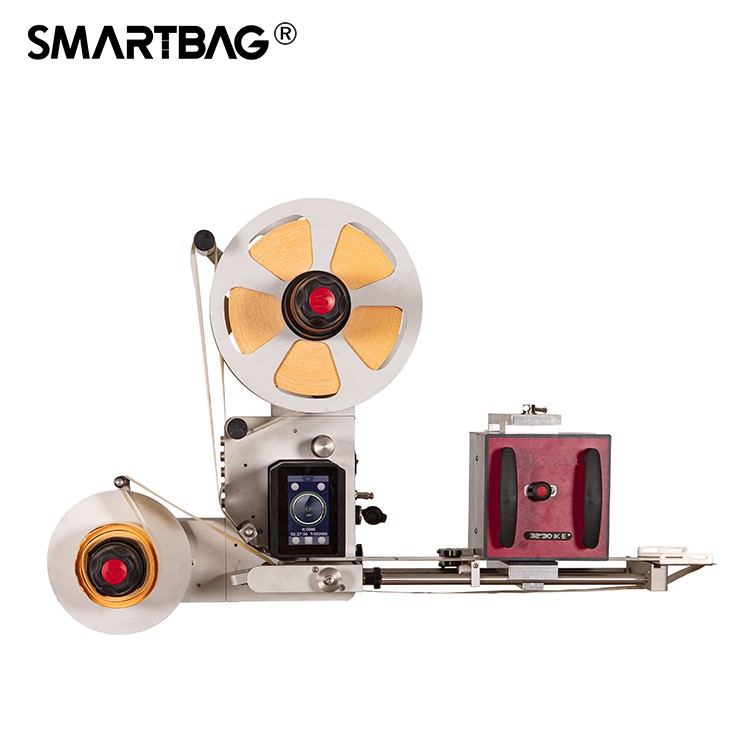



Introduction of Portable Labeling Machine
Labeling machinery refers to any equipment involved printing and attaching labels to the products. Labeling Machine has a wide variety of applications since most commercial products have attached labels on the actual item and its packaging. They can also create labels on cartons, cases, and pallets. The industries served by these machines are food and beverage, pharmaceutical, agriculture, home and office, electronics, agriculture, and much more. The applications of labeling machines are diverse and plentiful. Labeling machines can create texts and graphics as simple barcodes, 2D codes, batch code, and expiration dates to vivid images and logos.
Product Detail
Voltage: 110-220V 50Hz/60Hz, the voltage can be as local demand
Payment term: TT, LC
Delivery date: Negotiable
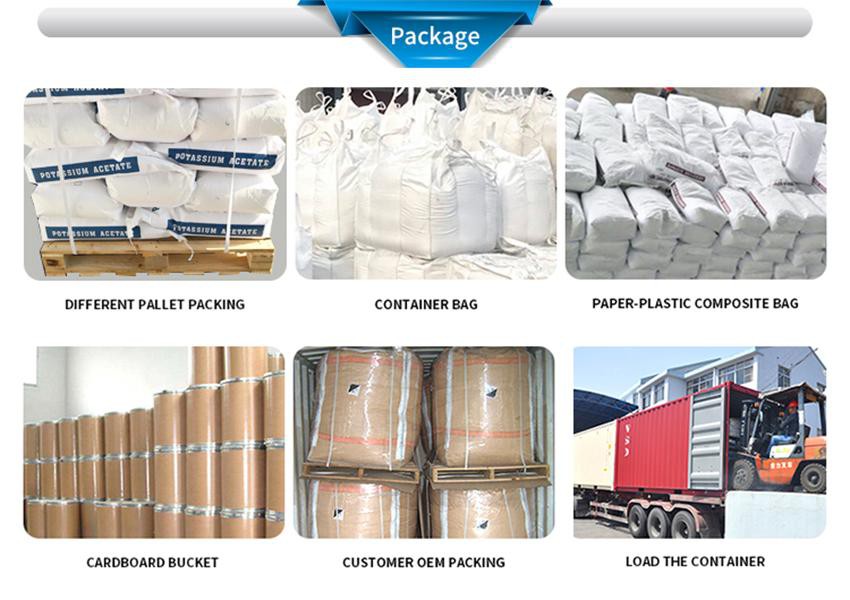
Packing: export standard
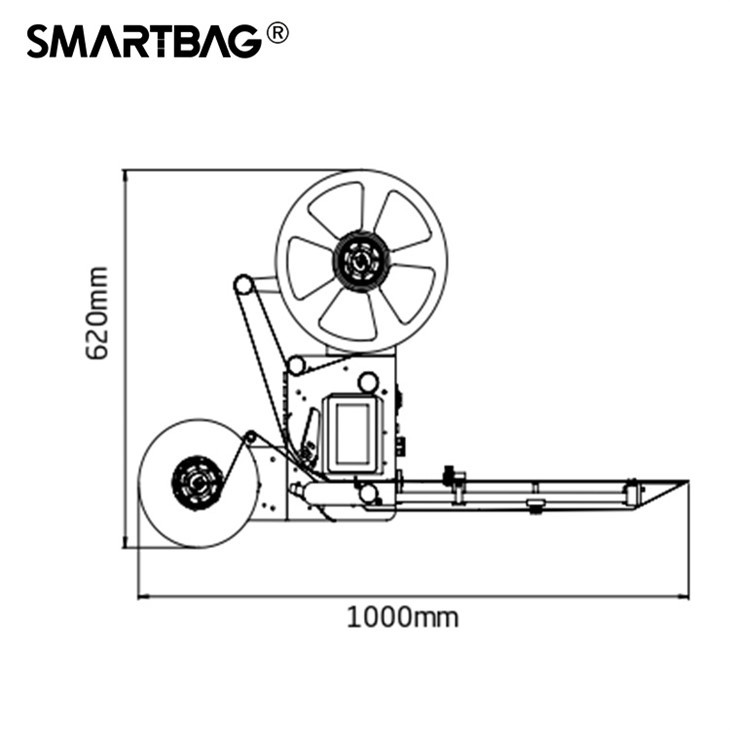
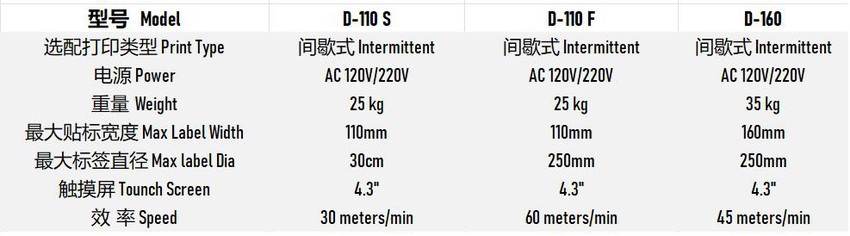
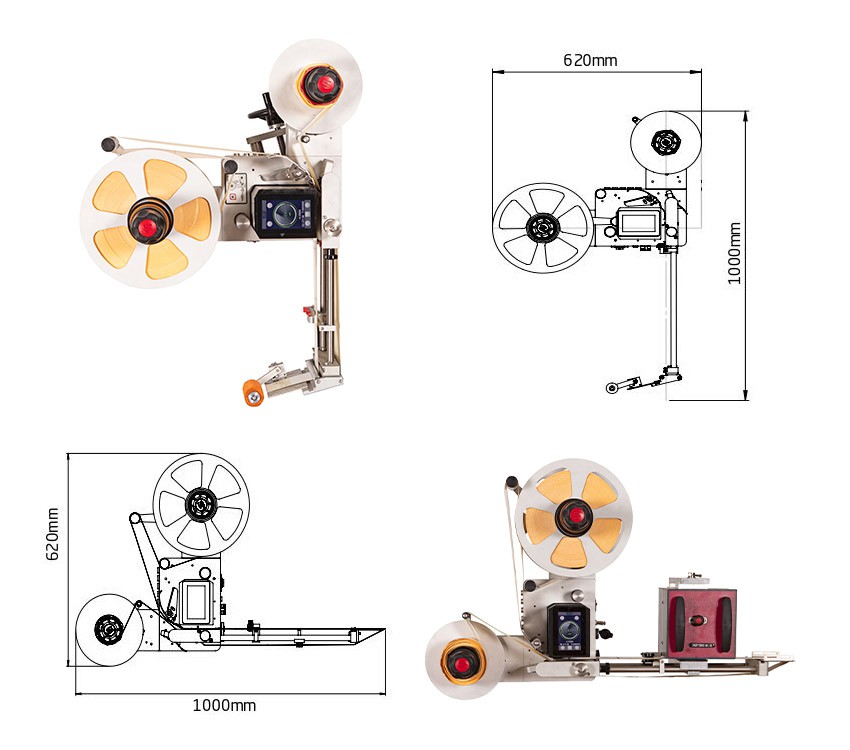
Product Specification
Why are Labeling Machines so Important?
Promote Brand Awareness
In essence, the label on every product is a branding tool. The manufacturer cleverly prints its brand name on the label, and then uses a labeling machine to attach the label to its products. In this way, when consumers walk into the supermarket and see these dazzling labels, they also understand the unique personality and the story behind each brand. In the long run, your brand awareness and recognition will get improved.
Provide Key Information
In the pharmaceutical industry, product information is critical to consumers. The labels made by labeling machines are more than just logos. They are also information centers, providing important details about the dosage, instructions for use and expiry dates of medicines. In a healthcare setting, accuracy is super important. These labels enable healthcare professionals and patients to make more informed choices.
Ensure Batch Differences
The production process normally involves many batches, so how do you distinguish which batch a particular product belongs to? This is where the labeling machine is needed. Labeling machines play a key role in distinguishing products. By assigning different labels to each batch, labeling machines help improve warehousing and distribution efficiency. This is not only for faster product identification, but also for maintaining order in complex production environments.
Product Properties
1.Intergrate printing and labeling
2.Easy install and operation
3.Missing label, damage, print fault warning
4.Compatible with transparent label
What Components Make Up a Labeling System?
Fully equipped for all conceivable labeling tasks, including a selection of different printing and monitoring systems and various options, our labeling solutions are suitable for a broad range of industries and applications.
The labeling machines also have several optional features, including separation, alignment, stabilization, review and rejection of individual faulty products, if necessary.
Today's labeling machines must deliver precision, speed and versatility – for example, in terms of the print module used: in single, double or multi-sided side, top and bottom labeling or (possibly in combination with) wrap-around labeling. We offer labeling solutions for fully automated in-line manufacturing as well as semi-automatic systems.
We have a suitable labeling system for every labeling application, no matter how demanding. Innovative rotary discs, electronic digital displays, format sets that can be changed without tools for rapid format adjustments, as well as operation of the entire machine ensure that the overall system is as effective as possible.
Benefits of Automatic Portable Labeling Machines
Speed
The most basic automatic labeler should be several times faster than a manual labeling station and at least twice as fast as a semi-automatic system. In the past, employers considered automation when a machine could replace one worker. Even if you don't need to reduce headcount or increase the speed of your production line, you still get a good return on investment. From there, you can easily scale up production without a labeling bottleneck. However, between increased labor costs, safety issues, and product requirements, you could see a good ROI long before you reach this point.
Accuracy
Human error is perhaps the biggest problem when it comes to labeling. It's easy to misplace a label when applying or use too little pressure, allowing the label to peel off. It's easy to get the container orientation wrong, resulting in a label in the wrong spot or wrong direction. Increase the number of labels on a product, and these errors increase exponentially. Need to add expiration dates, barcode labels, or other information to your labels? That's one more source of potential errors. Checks can be implemented to reduce these errors, but it's a complicated process. The simplest solution is to remove humans from product labeling entirely. These mistakes don't just result in waste. While people need to take breaks or adjust for errors, an automatic labeling system can maintain the same production rate until it needs a new label reel. This keeps the labeling station from becoming a bottleneck and slowing down production. Automatic labelers are also able to track and adjust applications, reducing issues with flagging and skewing. With manual labelers, these adjustments must be made by hand, and the range of adjustments is limited. Switching to automation increases application speed, reduces waste, and improves the appearance of your products.
Lower Labor Demands
If you have a manual or semi-automatic labeling machine, you need to have at least one employee on hand for labeling. When you switch to an automated labeling system, labor is only required to load label reels and check the occasional error. If you have a print-and-apply system, you also need to replace ribbons and print heads, as well as clean the printer. This lets you allocate staff in more valuable areas. It also improves employee satisfaction as applying labels is time-consuming, boring, and repetitive work, which leads to a high turnover rate.
Safety
Speaking of repetitive work, hand labeling is a major cause of repetitive motion injuries (RMIs) and musculoskeletal disorders (MSDs) in factories. Your manual labeling station could cause 3-5 ergonomic problems tied directly to workplace injuries.
Flexibility
Manual systems are usually fixed or only accommodate a limited range of label sizes. However, automatic systems can be set up for a wide range of label sizes. This lets you use one machine for different configurations with several types and sizes of products. The labeling machine has a color screen HMI. This human-machine interface allows for the operator to make adjustments, monitor, control, and load formats. Along with monitoring and controlling label application, the labeler stores calibration information. That means operators can set up the machine for a label one time, then easily recall those settings when switching back to that product.
Focused Design
Manual and semi-automatic stations are built to handle the most common labeling tasks, like applying wrap-around labels to standard-sized bottles. What if you're dealing with a challenging labeling problem? We make a range of custom labeling solutions that tackle the most difficult containers. Labeling bulk pails? We have a machine that can handle these heavy containers while preventing skew that plagues long label applications. Need multiple labels on a bottle? Our vertical trunnion roller labeler can be configured for front, back, seal, and neck labels, while our wine bottle applicator handles front, back, and cover labels. This gives you options and accuracy that can't be achieved any other way, even if your current equipment is used perfectly every time.
More Control for Better Label Placement
With an advanced color screen HMI, the operator has more control over label placement than with manual application. This interface gives the power to the operator to make any adjustments needed, monitor and control quality, and load new formats. Not only do operators have the ability to make adjustments, but they can also quickly switch between saved settings. Label settings are stored internally, so you can bring up different print formats as needed.
Types of labeling Machines
Manual labeling Machines
Manual labeling machines are the most basic form of labeling equipment. They require direct human effort to operate, with an operator manually placing and applying labels to products.
These machines are typically used in small-scale operations where the volume of products is manageable, and the speed of labeling is not a critical factor. They are cost-effective, easy to use, and require minimal maintenance, making them suitable for startups or small businesses.
Manual labeling machines are best suited to label round bottles or jars made of glass or plastic and small boxes.
Semi-Automatic labeling Machines
Semi-automatic labeling machines offer a middle ground between manual and fully automated systems. In these machines, some aspects of the labeling process are automated, but they still require human intervention for certain operations.
In semi-automatic labeling machines, an operator must manually place products into the machine, after which the machine automatically applies the labels. Once the label is applied, the operator again needs to remove the product from the machine.
Semi-automatic labeling machines are ideal for medium-scale operations where higher efficiency is needed, but the investment in fully automated systems is not justifiable.
Automatic labeling Machines
Automatic labeling machines represent the pinnacle of efficiency and speed in the labeling process. They are designed to handle high volumes of products with minimal human intervention.
Automatic labeling machines automatically dispense, apply, and secure labels onto products, often at high speeds. They have advanced features like conveyor belts, integrated printing systems, and sophisticated control panels.
Automatic labeling machines are essential in large-scale manufacturing environments where speed, consistency, and volume are critical.
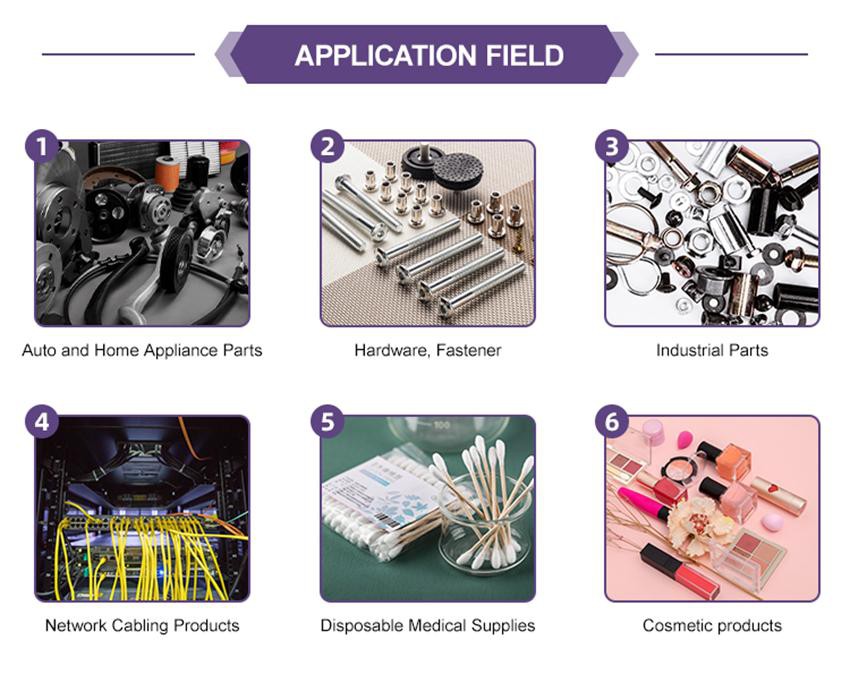
Application
Bottle Labeling
Glass and plastic bottles are generally cylindrical in shape and may sometimes be wet or damp during labeling, which makes them a complex challenge for labeling machines. Our wrap-around labeling machines and side labeling machines are perfectly equipped for such conditions. They not only enable you to apply labels to the bottles securely and accurately thanks to protection class IP66. The labeling machines can also be easily adapted to your requirements and integrated into existing production lines.
Labeling Machines for Vial Labeling
The use of small (glass) bottles, or vials, is common in the pharmaceuticals industry. The labeling machines for these vials need to apply their labels on very small surfaces with the utmost precision. Furthermore, when labeling vials, high security standards must be met to ensure gapless identification, serialization and exact traceability, for instance.
Labeling Machines for Vaccine Labeling
Labeling vaccines: this task has rarely been as important as in the development, mass production and worldwide distribution of the COVID-19 vaccine. The absolute reliability of the labeling on each individual vial is indispensable in this regard. Many millions of vaccine doses have to be labeled in a very short time – with maximum precision and performance and uncompromising healthcare process reliability.
Tamper-Evident Labeling
Sealed labels that are intended to protect pharmaceutical products from manipulation and counterfeiting can only be applied with the most precise of machines. The tamper-evident labeling system has been developed especially to meet all the standards for protection against manipulation and enables the exact application of seal labels on folding medicine boxes.
Our Advantages
1. Extensive production experience: We are specialized in package mechanical structure,and Electrical diagram design,our engineers have working and design experience in theis field for more than 15 year.
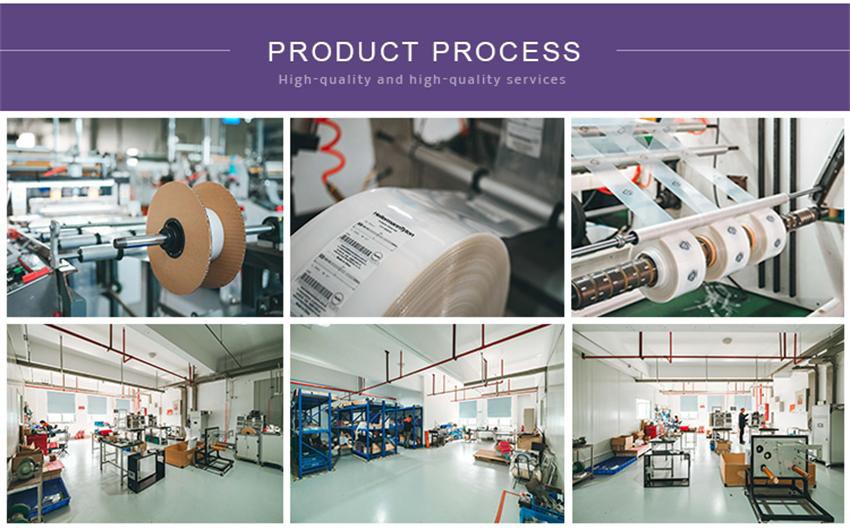
2. Complete production facilities: film blowing machine. Hot slitting machine, slitting machine, bag making machine, Our technicians will do regular scheduled maintenance on these machines to guarantee them work well.
3. High quality raw material: We mainly choose raw material from big plastic factory, such as BASF, which are best and largest raw material manufacturer in China.
QA&QC

Packing, Storage, Handling and Transportation
Tips on Selecting one Labeling Machines
label applicator machine is vital to many industries. Here are some tips on how to select one:
List the type of product surfaces of the product and select the appropriate machine. For example, the surface can be flat, concave, textured, convex, etc. hence the machine should be able to handle the size and shape.
Consider the type of label roll that is meant to be used like paper, film, foil, etc.
The production rate requirement should also be considered while selecting the appropriate machine.
For those who require the label to be accurately placed every time, ensure the label placement machine fits the tolerance level.
Not every machine has the ability to apply a label to every section of the product. At times there may be special requirements to place labels on multiple locations of a product and others may be hard to reach places, thus it is important to select the right applicator for your job.
Best Practices for Extended Labeling Machine Longevity
Operator Training
Providing complete guidance and training for machine operators is essential. A well-trained operator can identify and address issues promptly and minimize the risk of prolonged downtime.
Documentation & Record-keeping
Keep thorough records of all regular maintenance tasks and any troubleshooting you do. The tracking of component replacements, pattern recognition, and maintenance planning are all aided by this documentation.
Spare Parts Inventory
Maintain an on-site stock of essential replacement parts. This covers parts like rollers, sensors, and belts that are frequently changed. Easy access to spare parts accelerates the prompt settlement of unforeseen problems.
Adherence to Manufacturer Guidelines
Follow the manufacturer's instructions for upkeep, troubleshooting, and operating parameters to the letter. When advised measures are not followed, wear may accelerate, and unexpected breakdowns may occur.
Regular Audits and Inspections
Conduct periodic audits of the labeling process. This includes inspections of label application quality, machine settings, and overall system integrity. Address any anomalies promptly.
Environmental Considerations
Maintain a controlled environment conducive to labeling machine operations. Factors like temperature, humidity, and cleanliness significantly affect equipment performance.
Continuous Improvement Initiatives
Establish feedback mechanisms where operators can provide insights into potential improvements. Continuous improvement initiatives can lead to enhanced machine efficiency and reliability.
Hot Tags: portable labeling machine, China portable labeling machine manufacturers, suppliers, factory